
Finding People with the Ann Arbor Residents Directory
Start from whatever fact you already trust. A full name works. So does an address, a rough time period, or a known tie to a piece of land. In Ann Arbor, each of those leads to a different records office. A parcel entry answers the property question. The voter channel settles status and jurisdiction. The Register of Deeds documents an ownership transfer. The courts hold public case leads. AADL's directories place earlier households in time. Treat no single hit as a complete profile of a person.
- Search the county property form by taxpayer name, parcel, or the known street and municipality.
- Use Michigan Voter Information Center to corroborate current registration status and jurisdiction.
- Check the Register of Deeds index for a recorded deed, lien, or other ownership instrument.
- For an older person or address, search AADL's city and county directory editions and note the page.
- When the public view stops, send a narrow request to the custodian with the date range and record identifier.
Names repeat in every city. A property taxpayer may not be the occupant, and a dated directory entry may not match a current address. Before acting on any result, compare two independent records, especially where a township and the city share similar street labels.
Ann Arbor Residents Directory Records Offices
Ann Arbor addresses live across city, county, and state systems at once. Washtenaw County's Clerk/Register of Deeds records land instruments and runs county election and vital functions. Equalization and the local assessors keep the parcel and tax data. Michigan's election system holds the voter rolls. City records pass through the City Clerk. Each office answers a different question. A fast search still means labeling the evidence correctly.
Washtenaw County Clerk/Register of Deeds
P.O. Box 8645
Ann Arbor, MI 48107
734-222-6710
Washtenaw Equalization and Parcel Records
County property data
Ann Arbor, MI
734-222-6662
Parcel Search in the Ann Arbor Residents Directory
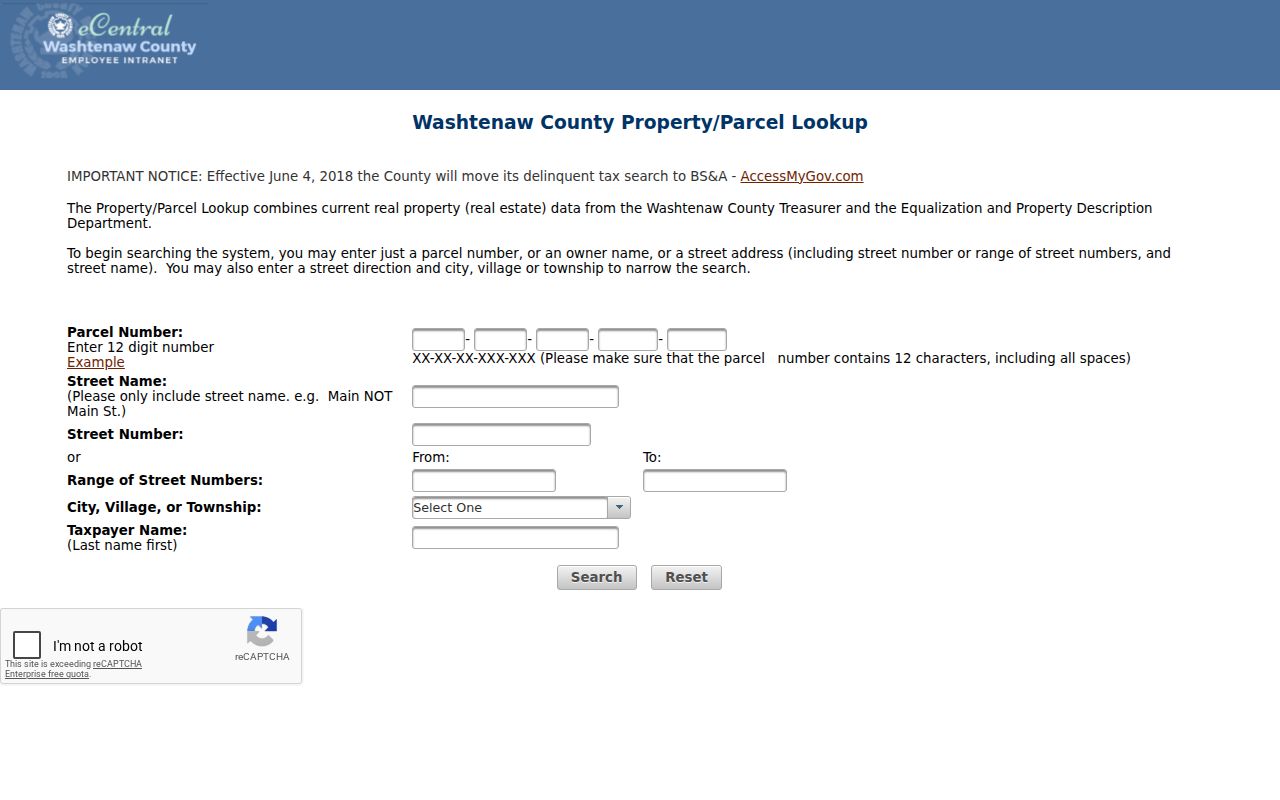
For a name tied to property, the Washtenaw Property/Parcel Lookup is the natural first stop. The form takes several search routes. You can enter a 12-character parcel number, a street name without its type, a single street number or a From-To range, or a municipality. A taxpayer name works too, entered in last-name-first order. City of Ann Arbor and Ann Arbor Township appear as separate choices. Pick the wrong one and the street returns nothing. There is no ZIP field, since the tool serves parcel administration rather than postal routing.
| Parcel form field | Best use | Local caution |
|---|---|---|
| Street Name | Enter the name only, such as Main | Do not add the street type to the query |
| Street Number or From/To | Find one parcel or browse a numbered stretch | Run the correct municipality first |
| Parcel Number | Match a precise county identifier | Keep it with the legal description |
| Taxpayer Name | Test a property relationship | Mailing and situs fields may differ |
The Washtenaw parcel-search screen displays the number-range and municipality options that support a productive first pass.
Record what the parcel entry gives you. Save the parcel ID, municipality, situs address, taxpayer name, mailing address, assessment year, legal description, and report date. The county itself advises verifying parcel data with the local assessor. Note that a Principal Residence Exemption percentage is tax evidence, not a roster of everyone in the household.
Situs and Mailing Fields in the Ann Arbor Residents Directory
Two address fields on a parcel record serve different masters. The situs address locates the property itself. The taxpayer mailing address shows where correspondence goes. They often match, yet they can also differ for perfectly ordinary reasons. A separate mailing field is a lead toward a taxpayer relationship. It is never proof that anyone lives there. The same caution covers the owner label. It also covers the school-district field and a Principal Residence Exemption percentage.
When a title question is at stake, pair the parcel record with the recorded deed. The deed is the conveyance evidence. Its legal description is the strongest bridge across changed street numbers, renamed subdivisions, or parcel splits. For an address-by-address chain, the Ann Arbor street directory carries the deeper street-by-street method.
Michigan Voter Records in the Ann Arbor Residents Directory
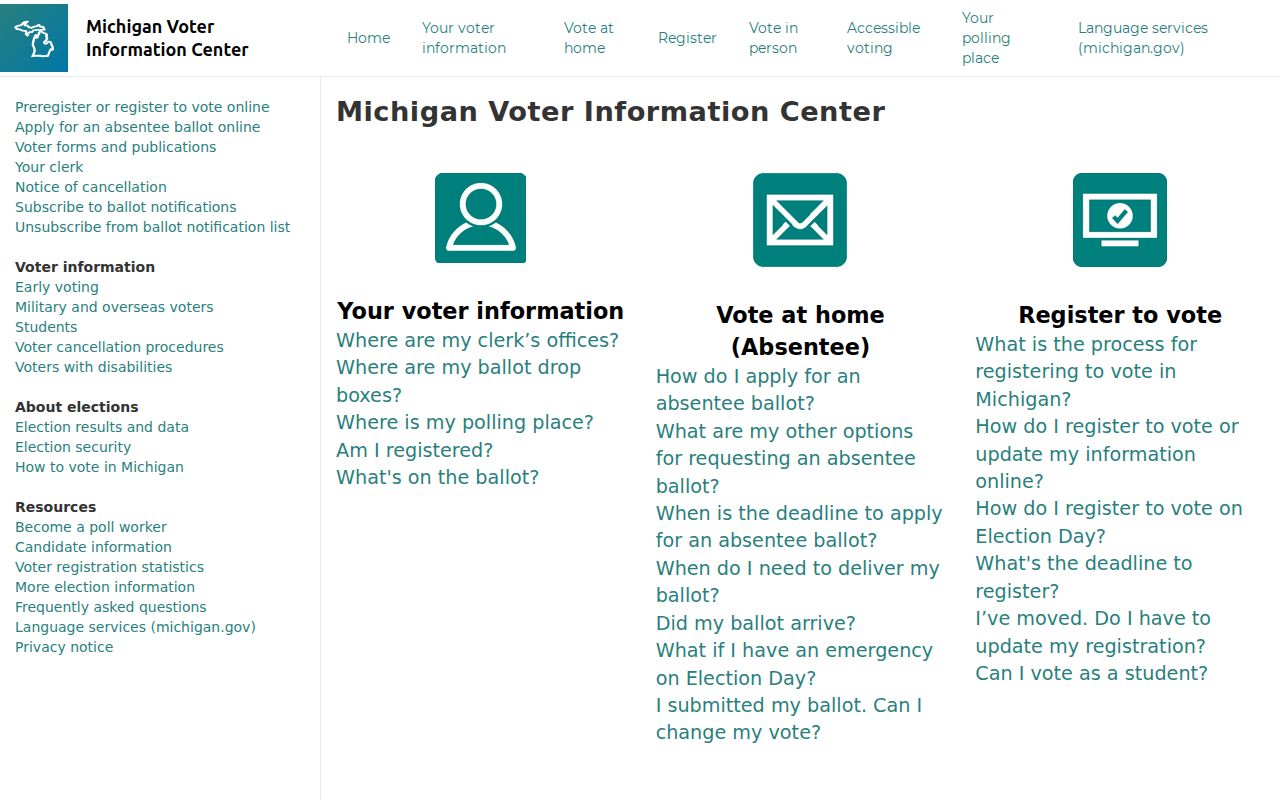
The Michigan Voter Information Center handles the individual route. A voter can confirm registration status, find the right clerk, and see a polling location, districts, and ballot details. The Qualified Voter File works differently. It is a written request scoped to one defined geography, such as a county, jurisdiction, ward, or precinct. The form allows voter-history requests but reveals no ballot choices. Michigan registers no voters by party.
The Michigan Voter Information Center page remains the public starting point for a personal status check.
Michigan FOIA opens voter registration records with firm limits. Driver and state ID data stay sealed. So do birth month and day, phone, email, signature, Social Security digits, and other protected fields. QVF files arrive by encrypted media, arranged FTP, pickup, or mail rather than ordinary email. Never reconstruct a protected address from public fragments.
Court Records in the Ann Arbor Residents Directory
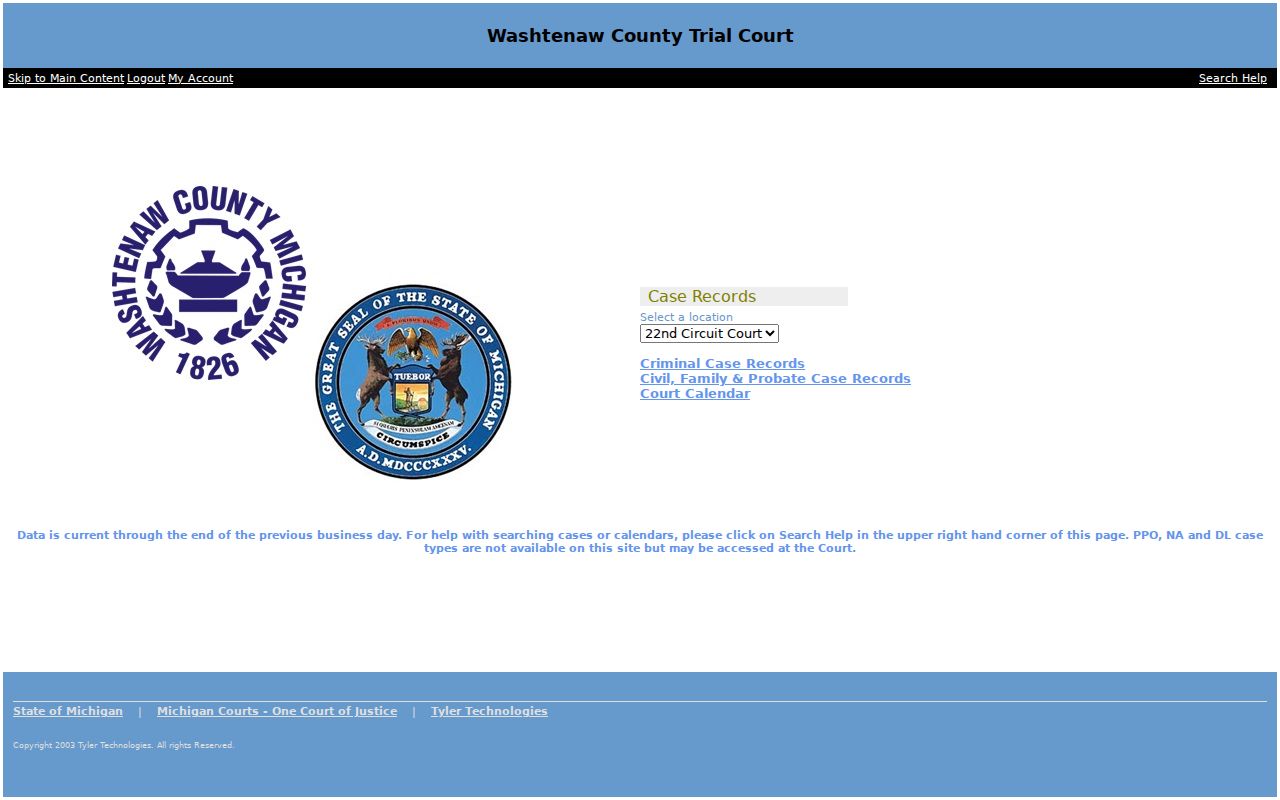
Court searching in Ann Arbor runs through separate doors. The city's 15th District Court search offers name paths. It also offers case-number paths with public Registers of Actions. Washtenaw Odyssey splits criminal, civil, family, and probate records and calendars. MiCOURT adds a statewide public layer. Use any case hit as a lead, not a verdict. Compare party role, file date, status, court, and name variants first. Draw no conclusion from a name alone. The Washtenaw Odyssey public-access interface shows the case categories and calendar route plainly.
Many case types sit outside public search entirely. The city also reports that cases closed before August 5, 2006 in its prior system require direct court contact. For copies, a question about a public file, or a correction, the court of record is the route, not the display page.
Current Ann Arbor Residents Directory Sources
Each official source gives only one slice of the Ann Arbor residents directory picture. A county parcel report anchors a property record. A voter check confirms election status. A deed index names the parties to a recorded transaction, and a public court result can surface a dated case lead. State license and business records can corroborate an affiliation. They cannot establish where a person actually lives. Ann Arbor planning association maps add a community boundary and contact layer. They are not a household roster.
| Current source | What it labels | Keeper | Access route |
|---|---|---|---|
| Parcel report | Taxpayer or owner, parcel, situs and mailing fields | Washtenaw County | Free portal, assessor verification |
| MVIC or QVF | Registration status or permitted voter fields | Michigan elections offices | Individual tool or written request |
| Land-record index | Grantor or grantee in a recorded instrument | Register of Deeds | Free index, copy login or mail form |
| License or filing | Public credential or organizational role | LARA or Corporations Division | Official state search |
| Association map | Registered boundary and primary contact | Ann Arbor Planning | Public map, not member data |
Official channels state their limits and offer a correction path. Commercial people-finder services blend old addresses, marketing data, and public records, which invites stale matches and same-name errors. To prove a specific fact in the Ann Arbor residents directory, rely on a custodian or library source.
| Comparison point | Official or library source | Commercial people finder |
|---|---|---|
| Record label | Identifies the parcel, docket, directory edition, or filing that supports the result | May combine several source types into a single profile |
| Correction path | Points back to an assessor, clerk, court, state agency, or library custodian | May not control the underlying government or archive record |
| Time context | Lets the reader retain a record date, volume, page, or filing date | Can blur historical and current entries |
- Roll
- A record set maintained for one function, such as property taxation or voter registration. It does not list every person in Ann Arbor.
- Index
- A guide to a record, often naming a deed party, case, or volume location without replacing the document itself.
- Parcel
- A county property unit identified by its own number, municipality, and legal description.
- Criss-cross directory
- A historical street listing that works from an address toward a dated occupant listing.
The property chain in Ann Arbor is refreshingly clear. The parcel report identifies the county record. The deed index identifies the recorded instrument. The Register of Deeds supplies the copy route. Public index searching is free through the public-user path. Online document copies require a registered login. The county mail form backs everything up when you have the names on the document. Have the document type, the liber or page, and the page count ready too. Fees run $1 per page and $5 for each certified document. No published online-index start year exists, so a custodian check still settles the oldest questions.
Permit Trails in the Ann Arbor Residents Directory
City permit research in Ann Arbor is organized by era, not one all-time database. OnBase holds digitized microfiche and paper material from roughly 1930 through 2007. A2Trak covers outstanding and archival material from about 2008 through March 2022. Stream begins with April 2021 and continues for newer applications. The overlap means a date search can require more than one city system.
A2Trak offers one fuzzy Search Criteria field. It accepts an address, parcel ID, site description, owner, or status. Its archived permit guidance says to omit the street type. Then inspect Permit Info and Attachments for notices, reports, and certificates. Permit material can date a project, an inspection, or an administrative event. It cannot by itself establish who lived at an address.
Vital Records in the Ann Arbor Residents Directory
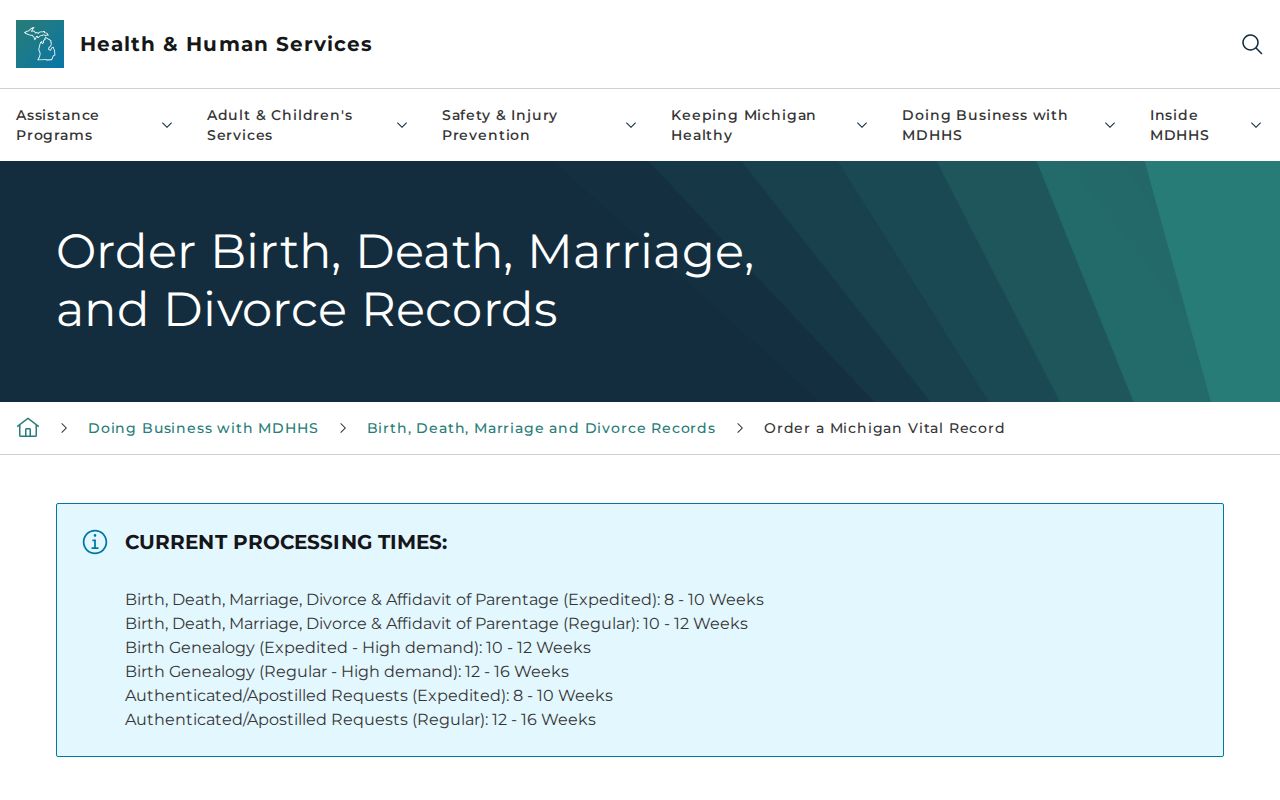
Michigan MDHHS registers and issues statewide birth, death, marriage, and divorce records. The Washtenaw County Clerk/Register of Deeds serves as the local registrar for county events. State files begin in 1867 for birth, death, and marriage. Divorce files start in 1897. A birth record less than 100 years old is restricted by MCL 333.2882. Death, marriage, and divorce certified copies follow a different written-request rule. A divorce court file also remains separate from the vital certificate. The Michigan vital-record ordering page shows the application route. Any vital-record request tied to the Ann Arbor residents directory starts there.
Order with exact names, alternate surnames, event place, and an approximate date. For a local historical fallback, the Archives of Michigan guide lists Washtenaw death index material from 1867 to 1933, marriage index material from 1833 to 1934, and a birth index for 1914 to 1922. A genealogy label does not bypass the restricted-birth rule within the Ann Arbor residents directory.
Historical Ann Arbor Directory Collections
AADL's digitized city and county directory collection spans listed editions from 1868 through 2001. The earliest listed edition is Chapin's 1868 directory. Nineteenth-century county and city volumes follow, then Glen V. Mills editions from the 1890s and early 1900s, and later Polk runs. The collection is extensive, but it does not claim an edition for every calendar year. Search inside the scanned volume first. Then verify OCR text against the page image.
The Downtown Library's third-floor local-history section holds old directories, local periodicals, genealogy books, yearbooks, University directories, maps, local documents, newspapers, and microfilm. A 1915 entry can carry a name, a spouse or household notation, an occupation, an organization, a street, and abbreviations such as res, bds, or wid. Those are historical listing terms. They are not proof of ownership or a complete household. The full collections workflow sits on the Ann Arbor city directory page.
Ann Arbor's directory tradition has a local story, too. In 1898, Glen V. Mills reported plans to build a directory library by exchanging publications with publishers in Detroit and Kansas City. The modern collection runs unusually deep. AADL's Ann Arbor News holdings include clipping files for 125,000 topics, 800,000 bound newspaper pages, and 2.3 million photographic negatives. Archive staff can search a climate-controlled collection and scan selected items on request. An email naming a person, a year, a street, and a precise clue often beats a broad web search through the Ann Arbor residents directory.
Township Islands and Ann Arbor Record Geography
Ann Arbor's border wanders. Decades of growth around township land left islands of unincorporated ground inside the city's reach. Scio, Pittsfield, and Ann Arbor Township all appear there. So one mailing address can sit under four municipal umbrellas. That matters for any resident lookup. The right records office depends on which government actually holds the file.
Annexation drove much of the shuffle. City materials describe a first round finished in 2016. Then came State Boundary Commission decisions and appeals running from 2021 through 2023. For a clean residents directory search, pair the parcel ID and legal description with the municipality. Keep all three in your notes.
ZIP codes only sort mail. USPS controls delivery formatting and ZIP assignment. The county parcel system owns its property fields. City and county GIS supply boundary context. When those layers disagree, honor each one's job rather than forcing a single address claim. The city directory entry and the county rolls can both be right.
MapWashtenaw helps here. It shows parcel geometry, aerial views, natural features, topography, and stacked city and county layers. The county calls it a reference tool, not legal evidence. That distinction matters. A boundary clue on the map can point to the correct municipality. But do not rest a title or boundary question on any map depiction alone. Confirm the parcel's formal description through the county report, a recorded deed, or a survey.
When Ann Arbor Residents Directory Searches Stop Online
An online dead end is really just a routing problem. The Ann Arbor residents directory points you to whichever office holds the record. Deed images sit behind a registered login for online purchase, or you can mail a copy request that names the document and pays the county's listed fees: $1 per page plus $5 for each certified copy. The Ann Arbor District Library keeps its climate-controlled archive closed to walk-ins, but staff will check inventories and digitize selected items when a request includes names, dates, context, and item clues. For city-held records, the City Clerk is the fallback. The Ann Arbor records-request page explains the city FOIA path.
Michigan's FOIA statute, 1976 PA 442, MCL 15.231 et seq., sets the rules for records requests in Ann Arbor. No special city form is required. A written request simply needs to identify the records sought. It must also give the requester's contact information. You can send it by email, mail, fax, or hand delivery. The city usually answers within five business days. A ten-business-day extension is allowed when the workload justifies it. Keep the scope tight. Confirm any response with the office that holds the records.
Fees give residents another reason to narrow the request first. Ann Arbor waives charges for the first hour of search and review. After that, the city bills in 15-minute increments at the lowest capable employee wage. The bill also carries the permitted fringe multiplier. Copies carry set prices: $0.05 per paper sheet, $12.50 for a 30 by 30 GIS print, and $1 for a CD or DVD. Estimates above $50 may trigger a 50 percent deposit. A precise office and a short date range cut delay. A parcel, case, or document number cuts confusion too.
Lawful use. Use public records for personal, lawful research, family history, estate questions, civic transparency, or source verification. Do not use any record trail to stalk, harass, intimidate, or harm a person.