
What an Ann Arbor Resident Lookup Can Confirm
Think of an Ann Arbor resident lookup as a set of narrow checks. It is not one master list. No single database answers everything. The County parcel record ties a taxpayer or owner to a parcel at an address. Michigan voter records corroborate registration status and jurisdiction. Court, vital, directory, professional, and business records each answer a different question. Each carries its own limits. Start with the source that fits your fact. Keep its date and custodian. Only then compare it against a second record.
| Ann Arbor record | Useful confirmation | Custodian or search | Access route |
|---|---|---|---|
| Parcel report | Taxpayer or owner, parcel, situs and mailing clue | Washtenaw Property/Parcel Lookup | Free online, then local assessor verification |
| Registration record | Status and election jurisdiction | Michigan Voter Information Center | Individual lookup or defined QVF request |
| Case docket | Public case lead, party role, date and status | Washtenaw Odyssey or court of record | Public categories, with exclusions |
| Vital record | Event facts for birth, death, marriage or divorce | Michigan MDHHS | Eligibility and fee rules apply |
| License or filing | Dated public affiliation or credential | LARA and MiBusiness Registry | Online verification, with source limits |
Match the record to the era of your question. For a present address, the parcel record comes first. You must separate its situs address from the taxpayer mailing address. A mailing address is a correspondence clue only. It is never proof that someone lives at the parcel today. For a historical question, reverse the order. Begin with a dated directory or yearbook. Treat the parcel or deed trail as a separate corroborating record.
Verify an Ann Arbor Resident Lookup Across Records
One matching name should never settle an identity question in a city this size. Same-name errors are simply too common. Keep middle initials, suffixes, spouse or parenthetical relationships, occupation or organization, street number and direction, parcel number, municipality, source date, and court year together in your notes. Those fields let you test whether two records describe the same person. They also guard against an old address. And they keep an office contact from posing as a current location.
- Normalize the full name, including former names, initials, suffixes, and a rough age or year of birth.
- Use the parcel report when property is involved, saving the parcel ID, municipality, situs address, and mailing address as separate fields.
- Use MVIC only as registration corroboration, then compare the jurisdiction with the parcel municipality.
- Search the appropriate court index by name variants and compare party role, filing year, court, and status.
- Use a vital event, directory entry, obituary, or custodian-held file to confirm the remaining identity detail.
- Docket
- A court's running case record, usually showing public events, parties, dates, and status rather than every underlying document.
- Index and image
- An index points to a record. An image is the scanned document or page, which may require a request, a login, or a fee.
- Certified copy
- A custodian-issued copy used to attest to an official record. It is different from an online search result or a library scan.
Court Routes for an Ann Arbor Resident Lookup
Ann Arbor offers three public court-search paths, and picking the right one matters. The 15th District Court case search supports name and case-number queries. It also posts public Registers of Actions. Washtenaw Odyssey separates criminal, civil, family, and probate case records along with calendars. MiCOURT adds a statewide layer on top. Treat each as a lead for identity work. Do not treat it as a claim that every case or record is public. The 15th District Court search page shows the name route alongside its alternate case-number path.
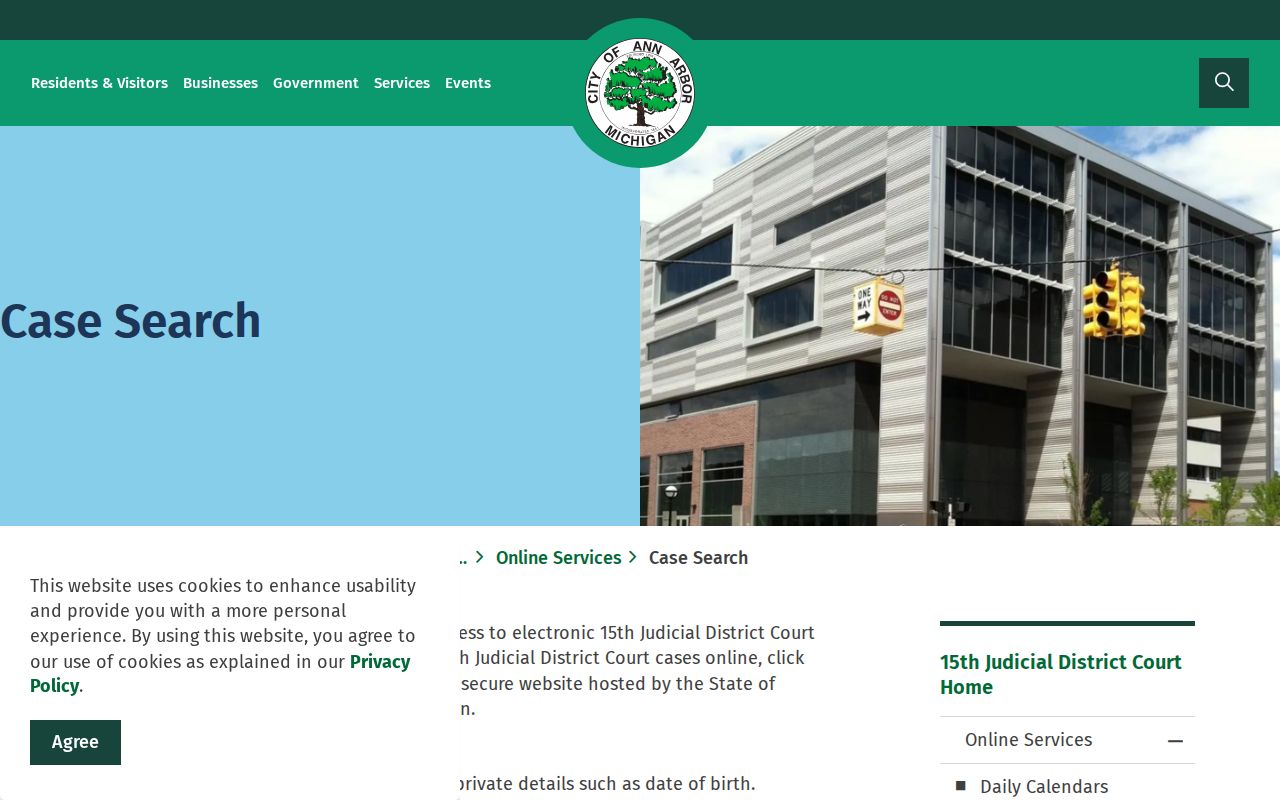
A public result can list a case number, year, type, title, and status. It may also show the party role, judge, and filing date. Ordinary users see no date of birth and no nonpublic cases. Cases closed in the Ann Arbor system before August 5, 2006 require a court contact. The court of record remains the right place to verify a file. It is also where you request a correction.
Michigan QVF in an Ann Arbor Resident Lookup
MVIC gives a voter their status, clerk, polling location, districts, and ballot information. The broader Qualified Voter File is different. It is a written data request, not a casual name search. Its form allows just one geography such as a county, jurisdiction, ward, or precinct. Delivery comes by pickup, arranged FTP, or mail. The request can include election history. But Michigan registers no one by party. History never reveals a ballot choice.
Michigan FOIA opens voter registration records. It shields driver or state ID information, month and day of birth, phone, email, signature, Social Security digits, and other protected fields. QVF data arrives as fixed-length or CSV material on encrypted media. Delivery is again by arranged FTP, pickup, or mail. It never comes by ordinary email. For local routing, the Ann Arbor City Clerk explains municipal procedure. Meanwhile the state form governs any bulk file request.
Vital Records in an Ann Arbor Resident Lookup
Vital records are event checks, not biographies. The Washtenaw County Clerk/Register of Deeds serves as local registrar for county events. Michigan MDHHS handles statewide certified copies and verifications. State files begin in 1867 for birth, death, and marriage, and in 1897 for divorce. Birth records less than 100 years old stay restricted under MCL 333.2882. Death, marriage, and divorce certified copies can be requested in writing with the required fee. A divorce court file remains a separate record entirely.
Older family questions have a different fallback. The Archives of Michigan guide lists Washtenaw birth index material for 1914 to 1922. It also lists death index material for 1867 to 1933, and marriage index material for 1833 to 1934. When a state or county form cannot resolve the question, pair an exact name, an approximate event date, and the county with AADL newspapers. Cemetery material, probate, or census records can help too. Never infer an event that the record lacks.
Ann Arbor Directories for a Resident Lookup
Two Ann Arbor residents who share a name are easier to tell apart with directories. The Ann Arbor District Library has digitized directory editions. These run from 1868 through 2001, covering city and county versions. The Downtown Library also keeps local-history material, yearbooks, newspapers, maps, and University of Michigan directories. Each directory hit carries its own date. Note the edition, page, street spelling, and any spouse, organization, or residence notation. Do this before you carry it anywhere else.
Former-classmate work can pair a yearbook name and class year with a directory address. Use a University directory or local directory for that school year. Ann Arbor News coverage can add context afterward. AADL archives are climate controlled rather than open stacks. Staff can search an inventory and scan selected material. Email archives@aadl.org with the person, street, date range, collection, and clue already found. For a current resident question, verify through a current custodian record.
Ann Arbor License and Public-Safety Checks
Michigan public databases can confirm a dated affiliation, but they cannot prove where someone lives. LARA's license search may show a licensee name, profession and type. It may also show status, expiration, address, issue date, specialties, email, and discipline where those fields apply. MiBusiness Registry searches an entity or an associated individual by name. A nine-digit ID or filing number works too. An agent, officer, or license address is a filing or professional contact. Never relabel it as a residence.
The Michigan public sex-offender registry is likewise a narrow public-safety tool. It is not a general residents directory.
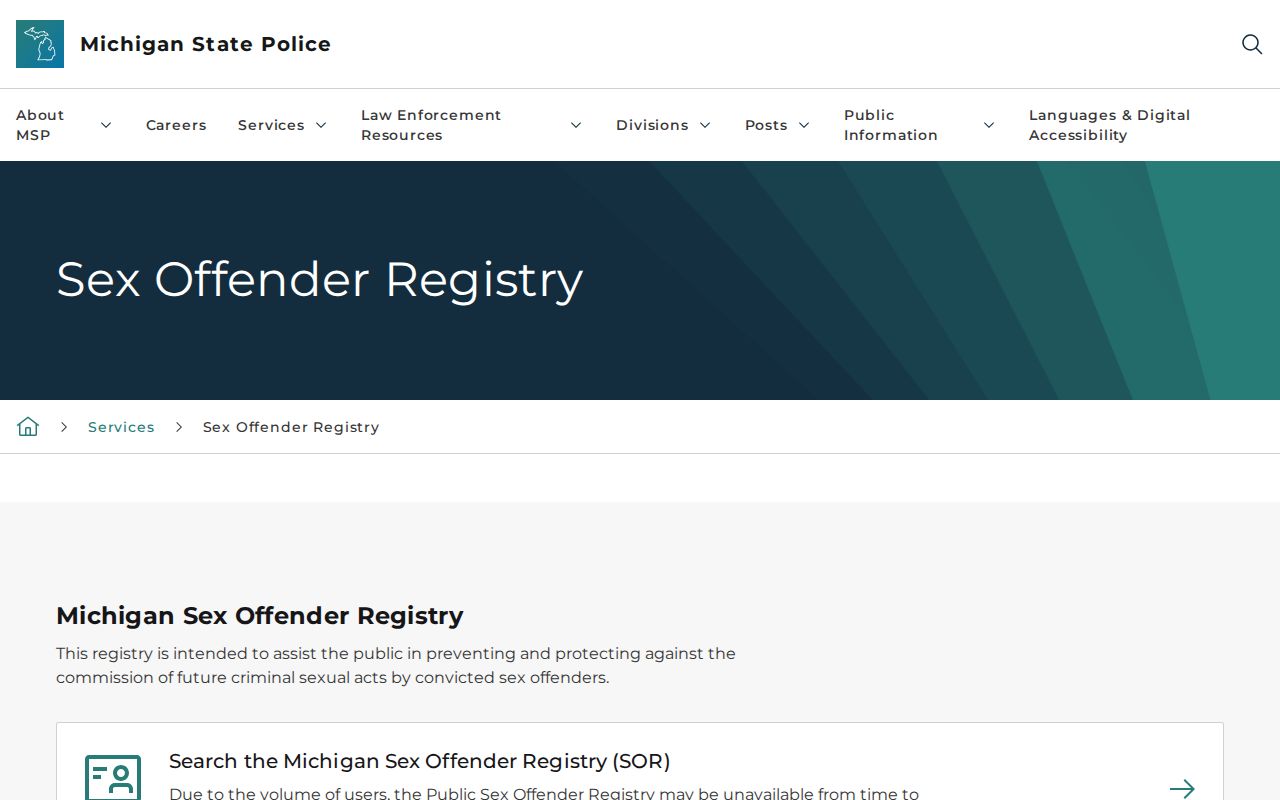
A registry entry answers only its own narrow question. It cannot prove that someone lives in Ann Arbor, belongs to a household, or matches a name on its own. Compare official identifiers and dates only when the registry's own scope fits the search.
When an Ann Arbor Resident Lookup Stops Online
A dead end usually means the record moved. It rarely means the person was never there. Custodians and access channels change over time. A parcel lookup in Ann Arbor can stall for several reasons. It might be a township choice, a split parcel, or a spelling variant. Court results get excluded, sealed, aged past public display, or filed in another division. A city directory volume may simply be missing a year. Or its scanned text may read badly. Write down the failed search terms. Then take them to the office that controls the record itself.
For anything the city holds, Ann Arbor takes written Michigan FOIA requests through the City Clerk. You can send them by email, mail, fax, or in person. Describe the record well enough to find it and include your contact details. No special form is needed. The city usually answers within five business days and can extend that by ten more. County deed copies go through the Register of Deeds request form. Court files belong to the court of record. Library and archive questions can use the reading-room or email route. MDHHS forms handle restricted vital records.
The Michigan license-search page shows how a state source can back a dated credential check.
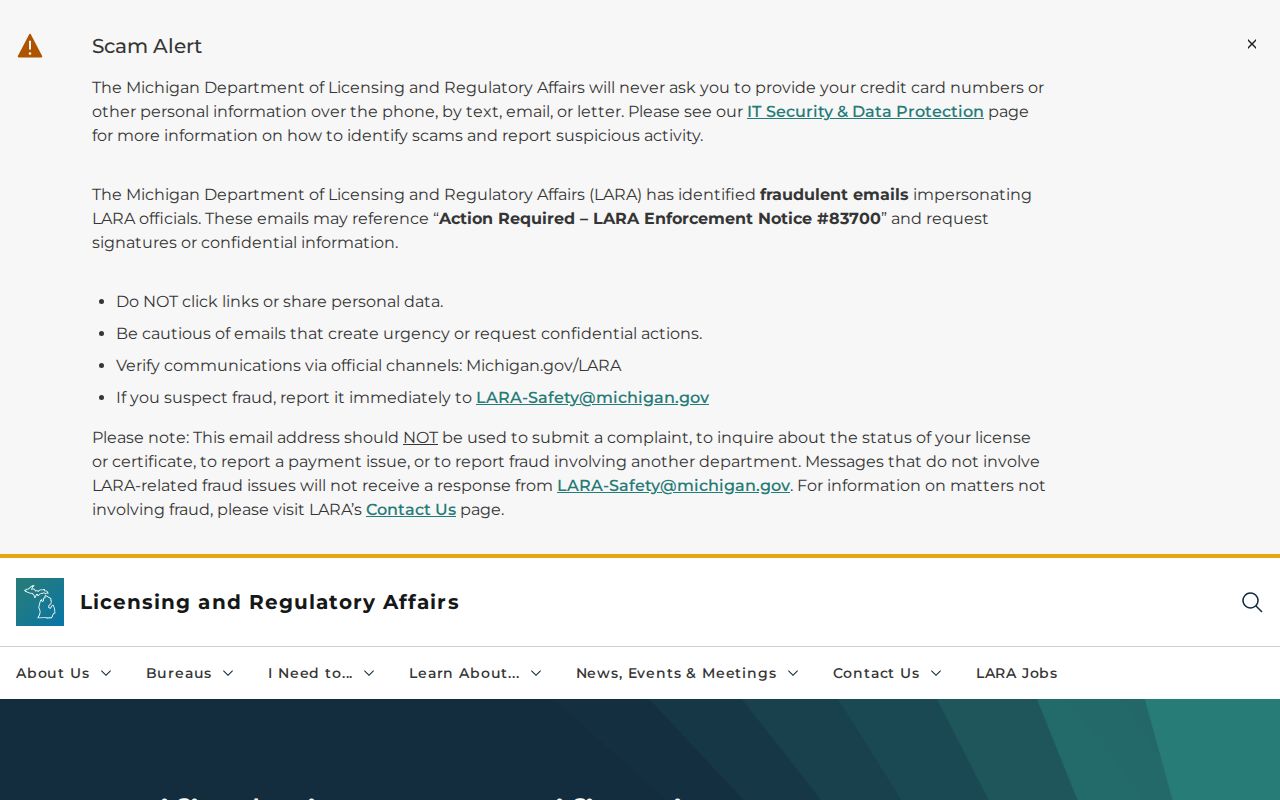
Treat displayed credential details as one comparison point, nothing more. When a parcel, voter, court, or vital record is wrong, ask its custodian to fix it. Never patch weak matches together into a conclusion.
Limits on an Ann Arbor Resident Lookup
Michigan's Address Confidentiality Program, created by the Address Confidentiality Program Act, 2020 PA 301, MCL 780.851 et seq., lets participants use a designated address with mail forwarding. Plenty of other material stays off limits in a resident lookup. Protected voter fields, private court categories, restricted birth records, driver and vehicle data, utility information, and full household details are not public search targets.
Roles can differ too. A parcel owner, a taxpayer, a directory entry, and a business contact in Ann Arbor may be four different people. Keep the source label and record year beside each result.
Lawful use. Use an Ann Arbor resident lookup for personal, lawful research, family history, estate questions, or source verification. Do not use public records to stalk, harass, intimidate, or expose a protected person.